Suddenly, everything vibrates, everything accelerates, and suddenly, nothing resembles the learning of two years ago. The world redraws itself, yes, immediately, adapt or feel left behind? Old training drags on, self-doubt picks at the mind, skills seem static. The floor tilts, ambitions slip. One tool takes the lead and shakes up the game: personalized, intelligent, everywhere, sometimes discreet, sometimes insistent. Welcome to ai coaching, the real deal in 2026—where billions pour into digital mentoring, where recommendations never stagnate, and where every step aligns with one’s own history. Platforms such as CoachHub or BetterUp attract companies and individuals alike, replacing paper and intuition with connective tissue built with lines of code that track, analyze, advise. The classic mentor fades, making way for digital feedback, adaptive support, no more waiting, the analysis arrives right on time, and new paths open. Personalized growth never left the conversation—it reveals itself with every click.
Also to see : How Can High-Tech Innovations Transform the Future of Computing?
The concept of ai coaching shaking up learning and work
The line advances, the screen lights up, and immediately, old mentoring seems like a distant echo. Everything moves: careers, ambitions, skills. Ai coaching absorbs the routine, reshapes relationships between guidance and ambition, automates intuition and notes, and adds an analytical power born from the biggest servers. Old sessions ran slow, sometimes personal, sometimes generic. The clock ruled feedback, memory handled progress tracking. Suddenly, data flows, algorithms pick up hesitation, and artificial intelligence reinvents every check-in. From session-based to real-time, from chitchat to behavioral analytics—yes, now everything passes through digital pipes. Those seeking structured pathways can explore ai coaching to understand how personalized digital mentoring transforms professional development.
In parallel : How Do UK Companies Implement High-Tech Solutions in Computing?
The mechanics and core rules that drive digital mentoring
Feedback never lags with machine-powered analysis. Traditional coaching waits for the next meeting—now the response flashes before doubts take root. Personalization? No more hunches or scribbles, adaptive algorithms update recommendations. Scalability sprints, digital mentors never sleep, timing bends to demand, platforms answer at dawn or lunch. Costs shrink, humans step back from repetitive labor, automation drives expansion. Bias shifts, sometimes it hides, transparency becomes the only shield. Disruptions appear, then the system corrects.
Personalization alone revolutionizes everything. Picture a dashboard suggesting a new module after picking up uncertain wording. Or digital encouragement before a high-stakes call. Behavioral analytics, NLP, unique journeys for every learner—these platforms respond as soon as weaknesses emerge or progress stalls. No more guesswork, no more progress hidden from view, digital platforms remove the gap between intention and result.
| Aspect | Traditional Coaching | AI Coaching |
|---|---|---|
| Feedback Speed | Delayed (session based) | Real time (automated responses) |
| Personalization | Coach’s intuition and notes | Data driven, dynamic algorithms |
| Scalability | Limited by coach availability | Unlimited, accessible at any hour |
| Cost | High, depends on labor | Lower, thanks to automation |
| Limitation | Human memory, coach bias | Potential for bias, needs transparency |
Impossible to miss, digital journeys adapt, drop insights as habits change, blend motivation with blunt feedback. Traditional conversations still hold weight, but algorithms move first, spotting forgotten exercises, correcting in the shadows.
The rise of automation and the changing face of coaching
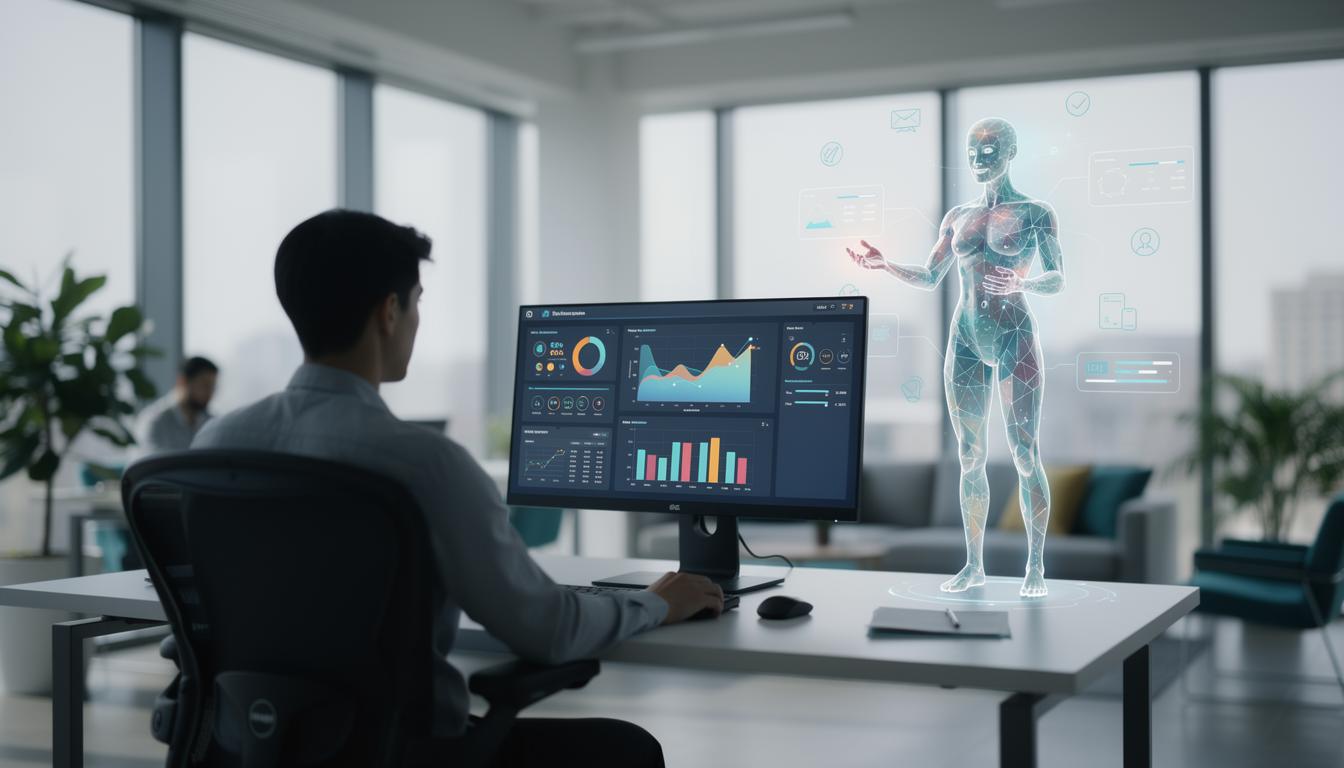
Look back two decades, nothing resembles today. Coaching stuck to paper, coffee, professional secrets exchanged behind closed doors. Suddenly, smart apps emerge, nudging, recording, analyzing. The transformation takes hold, virtual mentoring tackles nuance, measures tone, flags missing assignments, deep learning reshapes old logic. Mentorship digitalizes, UI replaces handshake, dashboards illuminate strengths, predict burnout, even propose workflow patches.
Today, generic workshops fade, dashboards pulse in schools, businesses measure performance with instant graphs, even Stanford’s AI researchers score learning paths. Machine intelligence watches over professional development, not futuristic, but embedded in every dashboard call. The shift sticks, the line between human and digital blurs, now every Zoom interaction turns into a moment of quantifiable growth.
The individualized learning journey and growth with ai coaching
No one drags the whole group at one pace anymore; algorithms sync with specific rhythms, quirks, ambitions. Responses on quizzes, missed assignments—everything sculpts a new path. No detail escapes digital attention. Personalized coaching absorbs behaviors and recalibrates instantly. Participants who zig, who zag, platforms pivot to follow. Classes that treat everyone identically lie in the past. Predictive dashboards push toward neglected skills, celebrate wins, and gently correct.
The adaptive path to mastery: How ai coaching speeds real progress
Research lands the verdict. According to a recent McKinsey study, custom AI support improves retention, and Coursera, for its part, reveals quicker improvements—up to 40 percent more efficient—among users who rely on intelligent digital feedback rather than pure e-learning. Strengths rise to the surface, weaknesses gently decline, skill gaps receive immediate attention, stagnation takes a backseat. Feedback always arrives at the perfect time, never late, never generic.
- Progress on neglected skills accelerates
- Confidence surges with clear data
- Adaptation never stops as performance fluctuates
A sudden testimonial disrupts expectations. “Training made me invisible, advice recycled, rarely specific. Now, digital guidance notices when I exceed benchmarks or struggle. Real support, precisely when motivation falters. My manager, still present, feels less obtrusive. Progress reflects weekly—motivation recovered so much faster, the data never distorts.” The confession slips from a London project leader, still amazed by the speed of transformation.
The performance surge: Engagement and growth in modern teams
Feedback holds power but remains limited when targeted by memory alone. Platforms now track every pattern, adapt to mood shifts, managers spot trends invisible to the naked eye. Unilever’s workforce felt the difference—a 17 percent rise in engagement when AI reminders kept staff on track, according to Deloitte’s recent survey. Automated check-ins end the excuse of forgetfulness, regular prompts keep spirits up, and quantifiable progress shows up in clear metrics.
Employee beliefs about their own careers evolve. Teams grow stronger as shared data reveals true strengths, and even hesitant managers find new confidence directing development. The digital coach emerges as a discreet partner, triggering the unfreezing of old behaviors, renewing drive, and surfacing unseen wins. The age of guessing whether progress happens has ended.
The technology backbone and main tools behind ai coaching
The most natural conversation sometimes happens with an app. NLP never stops evolving—it deciphers language, reads between the lines, extracts intention right out of ordinary words. Machine intelligence hums quietly behind every recommendation, tailoring advice without end, fed by victories, guided by failures, always learning, never static.
The algorithms and analytics behind smart coaching
Prediction stands out in the era of digital support. Analytics arrive not with a chart at the quarter’s end but by identifying doubt before it spreads. Algorithms reorganize paths, refocus reminders, shift advice. No plateau lasts long, the monthly update keeps platforms up-to-date, absorbing millions of new interactions every week. The user’s experience stays seamless, sometimes uncanny. Never does the guidance feel stale, always relevant.
The leading tools: Taking digital mentoring into daily life
Every year, new names surge forward. CoachHub finds favor throughout Europe, BetterUp drives engagement across the US. LEON designs specialized well-being modules, especially for resilience at executive levels. Product features stretch from skill dashboards to wellness prompts, and pricing fits from global enterprise contracts to flexible personal plans.
| Tool | Main features | Target audience | Price Range |
|---|---|---|---|
| CoachHub | Adaptive learning, skill tracking, enterprise analytics | Large enterprises, managers, teams | Mid to high, corporate pricing |
| BetterUp | Personalized feedback, mobile journeys, leadership | Individuals, leaders, HR | Medium, subscription tiers |
| LEON | Well-being focus, automated habit building | SMEs, individuals | Lower, flexible plans |
Integration appears seamless, whether embedding modules straight into a corporate dashboard or building standalone journeys for freelancers and educators. Universities adopt digital support for their online courses, businesses measure outcomes with new precision. Competition grows, features evolve, institutions crave the edge.
The barriers and dilemmas when embracing intelligent digital coaching
No technology succeeds without trust. Personal data in these platforms—performance metrics, ambition, even emotional triggers—never felt so exposed. Security standards carry weight: ISO, GDPR, local laws, compliance shifts with every new regulation, companies show vigilance in the face of reputational risk. Transparency reassures—the European Board’s recent audit wave demonstrates that opaque practices vanish, replaced by explicit guarantees of consent and data use.
The ethical debate around automatic feedback?
Tension settles where code shapes advice. Algorithms drawing on incomplete histories risk renewing old stereotypes, hidden bias persists unless confronted. Ethical standards evolve with every scandal, regular forums—MIT’s own labs included—spark critical debate, standards rise, clarity becomes obligation.
Designers open up algorithmic mechanisms, keeping feedback visible and interpretable. Digital advice steps aside just enough: blended models put professionals back in the process, moderating, correcting, adding empathy. Deloitte’s surveys put the number at seventy two percent—companies retraining staff to work alongside AI, not below. Pure automation never satisfies, harmony between human and digital wins the day.
The new horizon: Where will ai coaching and digital mentoring lead?
Everything looks different ahead, the boundaries blur. Career decisions move closer to continuous feedback and guidance shaped by intelligent analysis. Voice recognition adapts support to emotional tone, emotion analysis reads in the gaps—frustration, anticipation, boredom. Offices fade from memory, distance learning blends with augmented reality and negotiation rehearsal in VR. Growth surges in new directions as environments morph to fit need. Algorithms stretch, networks follow, innovation never settles.
The rise of shared intelligence: Will man and machine coach together?
No software truly replaces the gaze, empathy, or intuition of a person. Intelligent guidance runs in the background; humans filter judgement, provide reassurance, clarify ambivalence. Teams cultivate the mix, blending suggestion with real context. Ultimately, the most enduring growth appears in those who accept supervised support—human and algorithm carry the load in tandem. One adjusts, the other senses.
Growth feels personalized, yet anchored in something shared. Results jump, failures correct sooner. Confidence fills the teams that trust the blend. One simple truth: nothing stands still, innovation slips ahead. Who drives change, who adapts, who shapes the next step? None can remain spectators, not anymore.